Comparing childcare costs around the globe
Listen, I'm not advocating purchasing a dog in leu of having children. On the other hand, for god's sake don't invest a bunch of your libido in a cat. You're asking for an emotional beating.
1. The Most Expensive Countries for Childcare
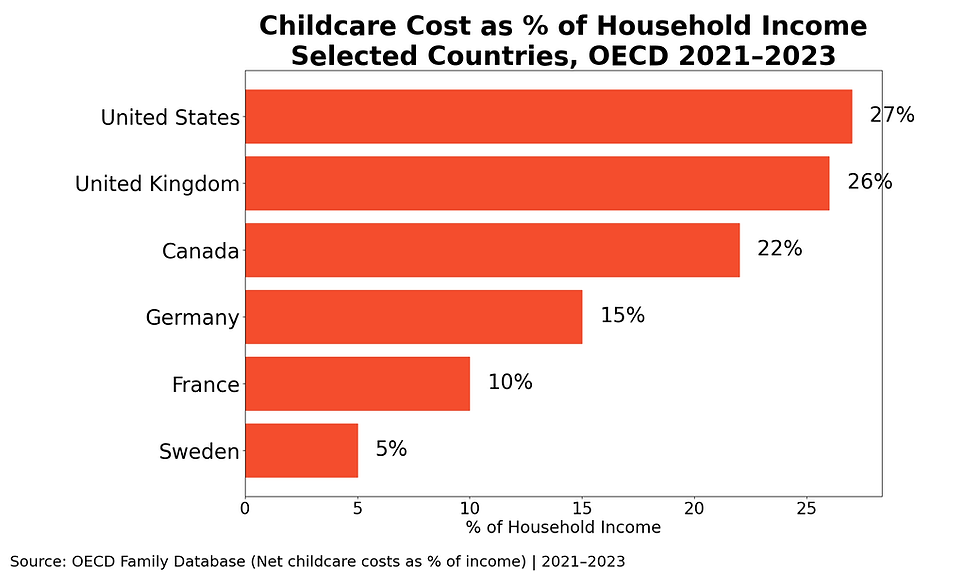
Childcare costs have become a defining line between financial comfort and strain. In several developed nations, families are spending a staggering share of their income just to secure reliable care.
🇺🇸 United States leads among high-cost nations, where full-time infant care often exceeds $15,000 per year—more than in-state college tuition in many states.
🇨🇭 Switzerland follows closely, with costs so high that many families rely on part-time work or informal care networks.
🇬🇧 United Kingdom rounds out the group, where parents can spend over 25–30% of household income on childcare.
What ties these countries together is limited public subsidy combined with high labor costs.
Why it matters: High childcare costs can quietly reduce lifetime earnings—especially for parents who step out of the workforce.
Striking reality: In parts of the U.S., childcare now consumes a larger share of income than housing for middle-class families.

2. Where Childcare Is Surprisingly Affordable
Not every country follows the same path. Some nations have made childcare affordability a cornerstone of economic policy—and the results are striking.
🇫🇷 France offers heavily subsidized crèches and structured support, keeping costs manageable for most families.
🇸🇪 Sweden caps childcare fees based on income, ensuring no family pays beyond a fixed percentage.
🇩🇪 Germany has expanded free or low-cost childcare in many regions, especially for children over age three.
These systems aren’t just social programs—they’re economic strategies designed to keep parents, especially mothers, in the workforce.
Why it matters: Affordable childcare often correlates with higher female workforce participation and more stable family incomes.
A revealing insight: Sweden’s capped-fee model means some families pay less for a full month of childcare than a single week in the U.S.

3. The Urban vs. Rural Divide
Even within the same country, childcare costs can vary dramatically depending on where you live.
🏙️ Major cities like New York, London, and Sydney command premium prices due to higher wages and demand.
🏡 Suburban areas often offer moderate relief, though availability can be limited.
🌄 Rural regions tend to have lower costs—but fewer providers, creating access challenges.
This creates a paradox: moving to a lower-cost area may reduce expenses, but also limit options and flexibility.
Why it matters: Location decisions are no longer just about housing or lifestyle—they directly impact childcare access and cost.
Unexpected twist: In some rural regions, waitlists—not prices—are the biggest barrier to securing childcare.

4. The True Cost: More Than Just Money
Childcare costs extend beyond the monthly bill—they shape careers, family size, and long-term wealth.
📉 Career trade-offs: Many parents reduce hours or leave the workforce entirely.
👶 Family planning delays: High costs are pushing couples to have fewer children or postpone parenthood.
📊 Wealth impact: Lost income and retirement contributions can compound over decades.
This is especially relevant for readers thinking about legacy planning and financial stability across generations.
Why it matters: The “cost” of childcare often includes invisible losses—missed promotions, reduced savings, and slower career growth.
Eye-opening fact: A parent who leaves the workforce for five years can lose hundreds of thousands in lifetime earnings.
5. The Rise of Alternative Care Models
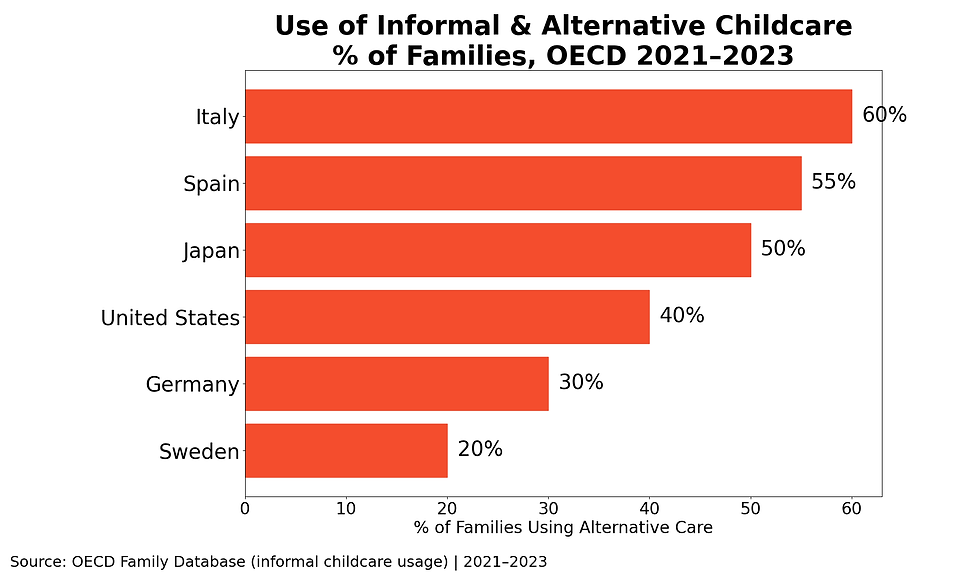
As traditional childcare becomes more expensive, families are getting creative.
👵 Grandparent care is making a strong comeback, especially in multigenerational households.
🏡 Nanny shares allow families to split costs while maintaining flexibility.
💻 Remote work arrangements enable parents to partially offset childcare needs.
These alternatives can reduce costs—but often come with trade-offs in consistency and scalability.
Why it matters: Flexible work and family structures are becoming essential tools for managing childcare expenses.
Interesting trend: In some cities, nanny-sharing can cut costs by up to 40% compared to solo private care.
6. Government Policy: The Ultimate Cost Driver
Behind every childcare system is a policy decision—and those decisions shape affordability more than any market force.
🏛️ Subsidy-heavy systems (like Scandinavia) prioritize access and affordability.
💼 Market-driven systems (like the U.S.) rely more on private providers.
⚖️ Hybrid models attempt to balance both, with mixed results.
The long-term effects go beyond families—they influence labor markets, economic growth, and even population trends.
Why it matters: Countries that invest in childcare often see stronger workforce participation and economic resilience.
Big-picture insight: Nations with generous childcare support tend to have higher birth rates—a key factor in long-term demographic stability.

7. Looking Ahead: What the Future Holds
Childcare is no longer a niche concern—it’s a global economic issue that will shape the next decade.
📈 Costs are rising in most developed countries, driven by labor shortages and regulation.
🤖 Technology may introduce new models, from AI-assisted learning to platform-based care networks.
🌍 Policy shifts are likely as governments respond to aging populations and declining birth rates.
For individuals and families, this means planning ahead is more important than ever.
Why it matters: Childcare affordability will increasingly influence where people choose to live, work, and retire.
Forward-looking prediction: By 2035, childcare policy could become as central to national competitiveness as healthcare and education.

Childcare costs may seem like a personal expense—but they are, in truth, a window into a country’s priorities, economic structure, and future trajectory.
For those thinking about relocation, supporting children or grandchildren, or optimizing long-term financial plans, understanding these dynamics is essential.
The world is changing—and sometimes, the most important shifts happen in the quiet, everyday decisions of family life.
Comments