WNBA Asks: What Is a W?
- snitzoid
- 6 hours ago
- 4 min read
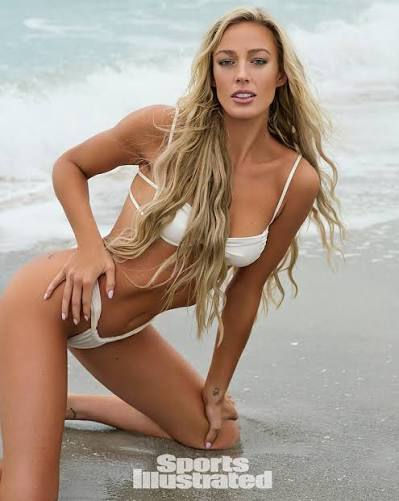
Ms Cunningham is crazy like a fox becoming a lightning rod for the issue while firing up a monster sized Instagram following. Her endorsement income this year has skyrocketed past $1 million and will like keep going, compared to the minecule product earnings of the average WNBA competitor. She's also the only WNBA player who's continually winning the bathing suit competition*.
Every time she gets fouled generates engagement and money in the bank.
*I'd like to personally apologize for Sports Illustrated's objectification of ....
WNBA Asks: What Is a W?
Sophie Cunningham’s fight for women’s sports gets an assist from Enes Freedom.
By William McGurn, WSJ
Aug. 10, 2026 5:36 pm ET
Sophie Cunningham of the Indiana Fever warms up before a game at United Center in Chicago, Aug. 8. Michael Reaves/Getty Images
The Women’s National Basketball Association has crossed over into “Saturday Night Live.”
In the latest episode, DiJonai Carrington, a player for the Chicago Sky, struck the Indiana Fever’s Sophie Cunningham in the head as she made a layup. After officials reviewed the footage, Ms. Carrington was called for a flagrant foul and ejected from the game. Minutes later, she posted from the locker room on Threads, a social-media platform: “WHITE PRIVILEGE @indianafever.”
Ms. Carrington is black and Ms. Cunningham is white, but the irony is that race isn’t even the most divisive issue here. The most divisive issue regarding Sophie Cunningham and women’s basketball is men in the WNBA.
The key to understanding this fight is recognizing that as much as progressives want men who say they are women to be allowed in women’s sports, they don’t have to get that to win. The activists will be happy enough if they can simply ruin the game for those fighting to keep women’s sports for women.
For what this movement really opposes is truth and the norms based on truth. If all they achieve is to advance the idea that norms are arbitrary expressions of personal preference, they win big.
That’s what makes Ms. Cunningham a target. Her offense is recognizing the truth that differences between men and women are real and substantive. “I want to protect young girls in a locker room, or young girls in sport who shouldn’t have to go against biological men,” she told ESPN.
It’s a legitimate concern rooted in her experience as a professional basketball player. And widely shared too: A 2025 New York Times poll reported that 79% of Americans believe men who “identify” as female “should not be allowed to compete in women’s sports.”
Yet this is the headline in the Athletic, the sports department of the New York Times, after the Cunningham-Carrington dust-up: “The WNBA conversation is no longer about basketball, and Sophie Cunningham doesn’t get why.”
Maybe it’s the Athletic and the larger world of sports journalism that don’t get it.
Still, the challenge for the powers that be in sports is to define “woman” in a way that at once is coherent and pays obeisance to the progressive canon. The WNBA answer is to say that “only players who are women are eligible to play in the WNBA”—without saying what a woman is.
That contradiction is proving untenable. WNBA Commissioner Cathy Engelbert issued a memo on Friday promising a task force to discuss the topic “thoughtfully, respectfully and in alignment with the longstanding values of our league.” Plainly, the last thing Ms. Engelbert wants is an official WNBA declaration on what the French once celebrated as la différence.
Ms. Engelbert did point out one interesting fact about the asylum that is today’s WNBA: It’s run by the inmates. “Our player eligibility rules, unlike the eligibility rules of some other leagues and governing bodies, are collectively bargained,” she wrote.
Only a few years back, men playing on women’s teams largely centered on noncontact sports such as track and swimming. Lia Thomas started out as a male swimmer at the University of Pennsylvania, but after “transitioning” won the NCAA Division I national championship in the women’s 500-yard freestyle in 2022. Today we are debating men competing in women’s basketball, a contact sport.
When a jurist nominated for the Supreme Court can’t say what a woman is, we are perhaps too hard on the WNBA. During the March 2022 Senate hearing on Ketanji Brown Jackson’s nomination, Sen. Marsha Blackburn (R., Tenn.) asked her a simple question: “Can you provide a definition for the word ‘woman’?” She answered, “No, I can’t.”
Now it’s entered the absurd. Two men who played for the NBA—Enes Kanter Freedom and Royce White—have just announced they will enter next year’s WNBA draft.
Mr. Kanter explained his move on X: “If simply declaring who you are is all that’s required, then I meet every single requirement necessary to compete in the WNBA.”
And he’s right. The WNBA has worshiped the gods of identity for so long that it can’t now insist on a reasonable definition for the first word in its name. The league has surrendered the most potent weapon at its disposal: reality.
As this weekend’s controversies underscored, the WNBA is now important mainly as a stage for everything but basketball. It’s a backdrop for a highly volatile debate that serves only to divide.
The Fever and Sophie Cunningham beat the Sky 90-86 on Saturday. Not that anyone cares.
Comments