What degrees are in greatest demand?
- snitzoid
- 1 day ago
- 6 min read
I asked Claude, what's the deal with computer science degrees? I've heard many recent graduates are having trouble finding work, however many experts claim they'll be in high demand. What gives? Or are only certain type of computer science grads in demand? It's response below.
Both things are true — that's the puzzle. The market has bifurcated in a way it hasn't in decades, and if you don't split junior from experienced, you'll keep reaching contradictory conclusions.
The numbers, briefly. Recent CS grads (ages 22–27) are running about 6.1% unemployment, with computer engineering grads at roughly 7.5% — well above the ~5.6% rate for recent college graduates overall. That's the fifth- or sixth-highest of any major, higher than philosophy, art history, or biology. At the same time, the BLS still projects software developer jobs to grow 15% from 2024 to 2034, about five times the average, and experienced developers remain near historically low unemployment. Both experts and pessimists are describing real slices of the same market. Articuler + 2
What actually happened. Four things stacked at once. First, the 2022–2023 tech overhiring reversed hard — over 100,000 tech workers were laid off in 2025, following 150,000+ in 2024, putting experienced engineers into the pool competing for the same roles new grads want. Second, AI tools are eating the work that juniors used to do — code generation, unit tests, boilerplate, first-draft debugging — so the ROI of hiring a green engineer to grow into competence has collapsed. Third, enrollment exploded: CS degrees more than doubled from about 51,700 in 2013–14 to 112,700 in 2022–23, so supply peaked exactly when demand contracted. Fourth, most of the openings that remain are senior-level, which grads structurally can't fill. FinalRoundAIFinalRoundAI
Who's actually in demand. This is where the "experts say high demand" story is genuinely correct — it's just not evenly distributed. The roles hiring aggressively right now, per Robert Half's 2026 data, are AI/ML engineers ($134K–$193K), data engineers, data scientists, DevOps engineers, cybersecurity engineers ($118K–$190K), and cloud/network engineers. AI, ML, and data science postings totaled 49,200 in 2025, up 163% from 2024, and security roles reached 66,800 postings, up 124% year over year. Cybersecurity in particular is structurally understaffed — roughly 3.5 million cybersecurity jobs are projected to go unfilled worldwide, and employment of information security professionals is expected to grow 29% through 2034. Robert Half + 2
The generalist "learn Java, get a $120K job at any company with a website" grad — that person is having a genuinely bad time. The grad who specialized in applied ML, cloud infrastructure, embedded systems, or security, ideally paired with domain knowledge (finance, healthcare, defense), is still getting interviews. One useful nuance from the Fed data: even with the higher unemployment, CS still has one of the lowest underemployment rates of any major (16–17% vs ~42% overall), meaning the grads who do land jobs mostly land actual degree-level jobs. It's the front door that narrowed, not the whole building. Articuler
The pattern worth noticing. Recruiters and CEOs who say "we can't find good engineers" and grads who've sent 500 applications with no callback are both telling the truth. The gap between them is roughly 3–5 years of experience plus a specialization the market currently cares about. For students choosing programs now, the schools emphasizing systems design, math/stats fundamentals, and AI/security concentrations look meaningfully better positioned than ones still teaching a generic "learn to code" curriculum.
Degrees that still pay off in a AI world
World Population Review
July 3, 2026
1. Computer Science: Still the AI Gold Rush?
Artificial intelligence may be replacing some coding tasks—but it is also creating unprecedented demand for people who understand how intelligent systems are built. 💻🤖
Computer science remains among the world's strongest-return degrees, although the field is changing rapidly. Routine programming is becoming automated, while demand continues rising for software architects, cybersecurity specialists, cloud engineers, and AI researchers.
Several countries—including 🇺🇸 the United States, 🇨🇦 Canada, 🇸🇬 Singapore, and 🇨🇭 Switzerland—continue reporting shortages of highly skilled computing professionals despite thousands of new graduates entering the workforce each year.
The lesson isn't simply "learn to code." The highest returns increasingly come from combining technical expertise with problem-solving, communication, and business understanding.
🔎 Worth remembering: Nearly every industry—from healthcare to agriculture—is becoming a technology company in some form, expanding opportunities far beyond Silicon Valley.

2. Engineering: The Quiet Champion
Engineering rarely dominates headlines, yet it consistently produces some of the strongest long-term financial outcomes of any university degree. ⚙️🏗️
Civil engineers build cities. Electrical engineers power modern economies. Mechanical engineers design everything from aircraft to medical devices. Environmental engineers are becoming increasingly vital as nations invest in cleaner infrastructure.
Countries including 🇩🇪 Germany, 🇰🇷 South Korea, 🇨🇭 Switzerland, and 🇯🇵 Japan continue experiencing shortages in several engineering specialties despite graduating large numbers of engineers every year.
Unlike many knowledge jobs, engineering combines mathematics, creativity, and real-world problem solving—skills that remain difficult to automate.
For students seeking stability rather than hype, engineering continues to be one of higher education's safest bets.
💡 Interesting fact: Many of today's CEOs—including leaders of Intel, General Motors, and Hyundai—began their careers as engineers rather than business majors.

3. Healthcare: Demand That Demographics Can't Ignore
One trend is almost impossible to reverse: the world is getting older. 🏥👵📈
As populations age across 🇪🇺 Europe, 🇺🇸 North America, 🇯🇵 Japan, 🇰🇷 South Korea, and 🇨🇳 China, demand for healthcare workers continues climbing faster than supply.
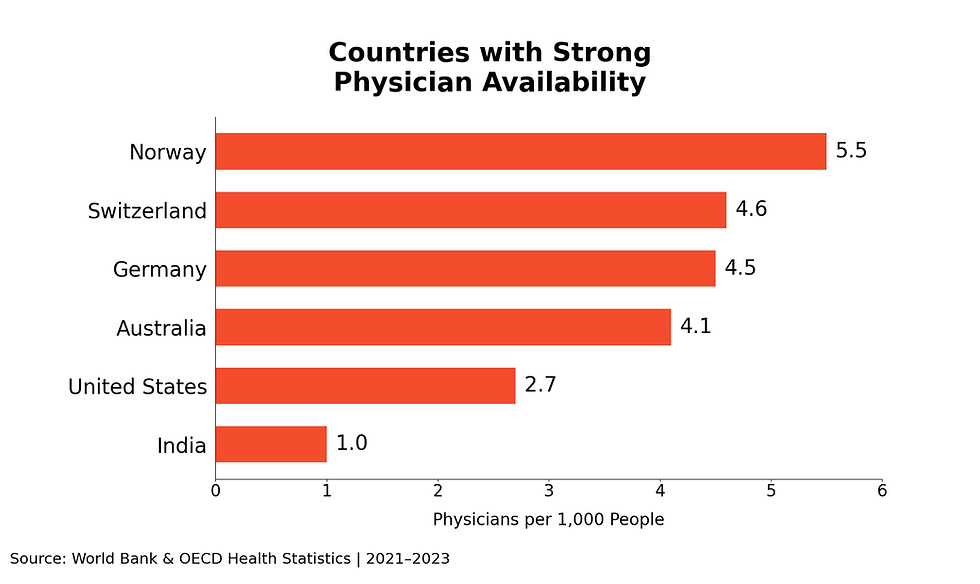
Doctors remain highly compensated, but they're far from the only winners. Nursing, physiotherapy, occupational therapy, radiography, physician assistants, speech pathology, and medical technology all offer excellent long-term prospects.
Healthcare careers also tend to be remarkably resilient during recessions because illness doesn't follow economic cycles.
Technology will undoubtedly change medicine, but AI is expected to assist healthcare professionals far more often than replace them.
📊 A powerful demographic reality: By 2050, people aged 65 and older will outnumber children under 15 globally for the first time in history—a profound shift likely to keep healthcare careers in demand for decades.
4. Business Degrees: More Valuable Than Ever—If They're Practical
Business remains one of the world's most popular degrees, yet outcomes vary enormously. 💼📊
Graduates specializing in finance, accounting, supply chain management, business analytics, and operations often enjoy strong employment and salary prospects.
General business degrees without specialized skills, however, increasingly face tougher competition.
Employers today value graduates who understand data, technology, global markets, and communication—not simply management theory.
MBA programs also continue evolving. Many now emphasize artificial intelligence, entrepreneurship, sustainability, and digital transformation rather than traditional corporate management alone.
The degree itself matters—but increasingly, so do internships, networking, and practical experience.
📈 Something employers repeatedly report: Communication, leadership, and decision-making remain among the hardest skills to automate, making them valuable companions to almost any technical degree.

5. Skilled Trades: The Unexpected Return on Investment
One of today's biggest education stories isn't happening inside universities at all. 🔧⚡
Electricians, plumbers, welders, HVAC technicians, elevator mechanics, and industrial maintenance specialists are experiencing booming demand across many developed economies.
Training often takes just two to four years, costs a fraction of a university degree, and frequently leads to incomes rivaling—or exceeding—many white-collar professions.
Mass retirements among experienced tradespeople, combined with decades of declining vocational enrollment, have created significant shortages.
For many families, vocational education is no longer a backup plan. It is becoming a first-choice investment.
🏆 Perspective: In several countries, experienced electricians and plumbers can earn more than many graduates with master's degrees—while carrying little or no student debt.

6. Liberal Arts: Reinvention Instead of Decline
Few subjects generate more debate than liberal arts. 📖🎭
Critics argue they're becoming obsolete. Supporters believe they develop precisely the skills AI cannot easily replicate.
The reality lies somewhere in between.
Degrees in history, philosophy, literature, psychology, languages, and political science rarely guarantee high salaries on their own. However, graduates who combine them with data analysis, digital marketing, law, public policy, UX design, or technology often thrive.
As artificial intelligence increasingly handles information, uniquely human abilities—critical thinking, ethical reasoning, storytelling, negotiation, and creativity—may actually become more valuable.
The question is no longer whether liberal arts matter.
It's whether graduates can connect those timeless skills to today's economy.
🧠 An unexpected twist: Many technology companies actively recruit philosophy graduates for AI ethics, policy development, and strategic decision-making roles.

7. The New Formula for Career Success
The highest-return degree of the future may not be a single degree at all. 🚀🎓
Employers increasingly reward people who combine multiple strengths: engineering with business, healthcare with data science, psychology with artificial intelligence, finance with programming, or design with technology.
Universities around the world are responding by creating interdisciplinary programs built around solving real-world problems rather than traditional academic departments.
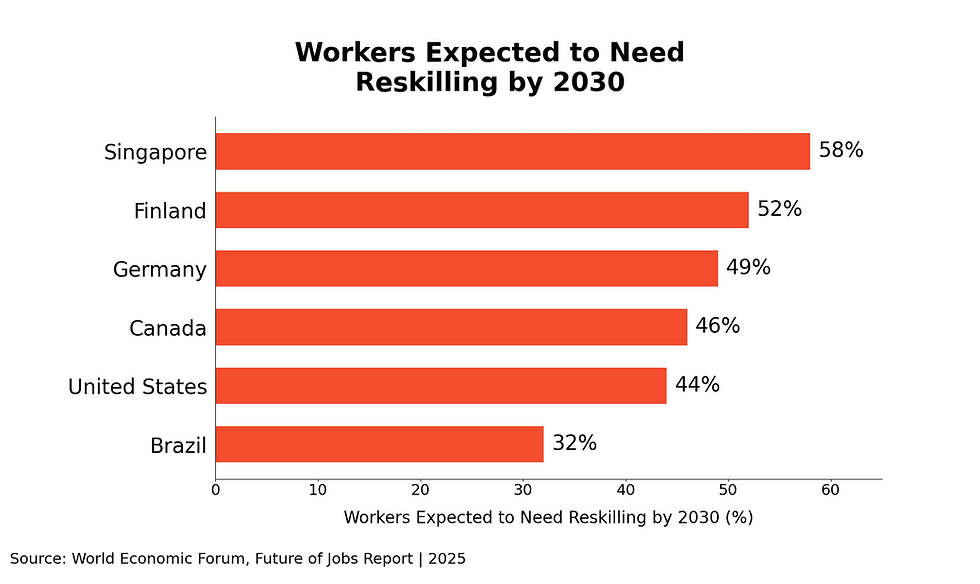
Lifelong learning is also becoming the new normal. Microcredentials, professional certificates, and online courses allow workers to update skills continuously throughout their careers.
Perhaps the biggest shift is this: education is becoming less about earning one credential and more about continuously building valuable capabilities.
🌎 Looking ahead: The average worker entering today's job market is expected to change careers—not just jobs—multiple times during their working life, making adaptability one of tomorrow's most valuable skills.
Education is about more than earning a degree—it's about preparing for the future.
As technology reshapes the workplace, understanding where opportunity is growing can help you make smarter decisions for yourself and the people you care about.
Comments